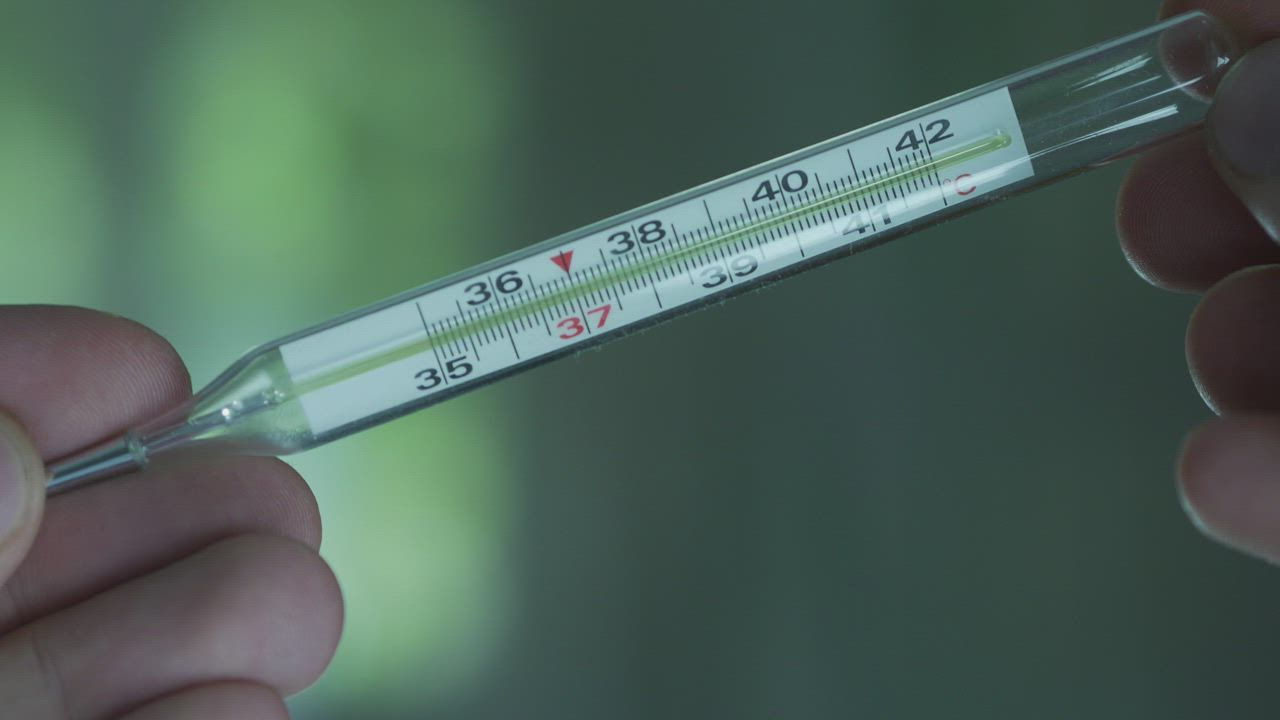
Temperature-controlled pharma air cargo flies in qualified packaging that holds the label range, usually 2 to 8 °C or 15 to 25 °C, with data loggers recording the whole journey. Pharmaceutical air freight is handled under Good Distribution Practice and the IATA Temperature Control Regulations, so the product arrives as safe and effective as it left.
Key takeaways
- Book pharma capacity by qualifying the lane first, then choosing an airline pharma product, packaging and monitoring that cover the whole door-to-door time with a margin.
- Most medicines ship at 2 to 8 °C (chilled) or 15 to 25 °C (controlled room temperature); some need frozen or deep-frozen conditions, often with dry ice.
- EU GDP (2013/C 343/01, chapter 9) and WHO TRS 961 Annex 9 require that transport keeps products within their labelled conditions, with documented proof.
- The IATA Time and Temperature Sensitive label is mandatory on healthcare shipments booked as temperature-controlled, and it shows the external transport range in Celsius.
- Most excursions happen on the ground, during handovers and tarmac waits, not in flight.
How do you book temperature-controlled pharma capacity?
Qualify the lane first, then book an airline pharma product with packaging and monitoring that cover the full door-to-door time with a margin. The booking should state the temperature range, packaging type and monitoring plan so every handler knows what the shipment needs.
- Qualify the lane and assess the risk. Map origin, transit and destination airports, the ground legs at each end and seasonal temperatures. EU GDP expects "a risk-based approach" when planning transport, and that risk assessment drives every later choice.
- Choose the airline product. Most large carriers sell a branded pharma product with priority handling and temperature-controlled storage at their hubs. Pick a carrier whose hub and stations on your route are covered by it, and check where they hold CEIV Pharma certification.
- Choose and reserve the packaging. Decide between active containers and passive shippers (compared below). Active units are leased from container providers, so they must be reserved with the lessor and accepted by the airline for the aircraft type on your flight.
- Prepare the documents and labels. Apply the IATA Time and Temperature Sensitive label with the external transport range, state the same range on the air waybill and booking, and add any dangerous goods paperwork if you use dry ice.
- Add monitoring. Place calibrated data loggers with the product, and choose real-time devices on high-value or long lanes. Check that the airline accepts the device; Cathay Cargo, for example, publishes a list of electronic monitoring devices approved for carriage.
- Agree the contingency plan. Decide in advance who acts on a delay or excursion, where the cargo can be re-iced or re-conditioned, and when the consignee must be told.
Three examples of airline pharma products with published details:
| Carrier | Product | What the carrier publishes |
|---|---|---|
| Emirates SkyCargo | Emirates Pharma (launched 2016) | GDP-certified pharma handling and storage at Dubai (DXB and DWC) and a fleet of cool dollies for transfers between aircraft and terminal (October 2026) |
| Turkish Cargo | TK Pharma Standard, Extra and Advanced | Tiered service; Advanced uses active and hybrid containers holding a constant temperature between -70 °C and +30 °C |
| Cathay Cargo | Cathay Pharma Active and Passive | Four transport ranges (FRO, COL, CRT, ERT), six container suppliers and 24/7 monitoring by its operations control centre |
Product names, stations and container partners change, so confirm the current offer for your exact route when you book.
What to share when you request a booking
- Product temperature range and allowed excursions from stability data.
- Packaging type, its qualified duration and the ambient profile it was qualified for.
- Value, pieces, weights and dimensions (the chargeable weight calculator gives a quick estimate).
- Origin and destination requirements, including import permits.
- Monitoring and reporting requirements, and who receives alerts.
Our JumboPharma service plans each lane around these requirements, from packaging choice to priority clearance. Ask any carrier or handler you book with to confirm its own certifications for your lane.
Which temperature ranges do pharma shipments use?
The label decides, but most temperature-controlled pharma air cargo falls into a handful of standard ranges.
| Range | Temperature | Typical products |
|---|---|---|
| Controlled room temperature (CRT) | +15 to +25 °C | Many tablets, capsules and generics |
| Extended room temperature (ERT) | +2 to +25 °C | Products whose stability data allow a wider band |
| Chilled / refrigerated (COL) | +2 to +8 °C | Most vaccines, insulin, many biologics |
| Frozen (FRO) | Commonly -25 to -15 °C; Cathay defines FRO as below -18 °C | Some vaccines, plasma products |
| Ultra-cold / deep frozen | About -80 to -60 °C | Some mRNA products, certain cell therapies, usually packed with dry ice |
| Cryogenic | Below -150 °C | Cell and gene therapies, in liquid nitrogen dry shippers |
The three-letter codes are those airlines use for their transport ranges; Cathay Cargo, for example, lists FRO (below -18 °C), COL (+2 to +8 °C), CRT (+15 to +25 °C) and ERT (+2 to +25 °C). Always book against the exact range on the product label and stability data, not a generic category.
Deep-frozen shipments usually rely on dry ice, which is UN1845 and regulated as Class 9 dangerous goods by air. The quantity must be declared and marked and the package must let carbon dioxide gas escape; our guide to shipping dry ice by air (UN1845) covers the limits and paperwork. Vaccines and biologics follow the same ranges with tighter controls; see how vaccines and biologics are shipped by air.
Which rules govern pharmaceutical air freight?
Good Distribution Practice sets what regulators expect, and IATA's Temperature Control Regulations and CEIV Pharma translate it into air cargo procedures. Shippers need to meet the first and should choose partners that work to the second.
EU GDP guidelines (2013/C 343/01)
Chapter 9 of the European Commission's GDP guidelines covers transportation. As the ECA Academy's chapter 9 checklist quotes it, the supplying wholesale distributor must protect products "against breakage, adulteration and theft" and "ensure that temperature conditions are maintained within acceptable limits during transport." Whatever the mode, "it should be possible to demonstrate that the medicines have not been exposed to conditions that may compromise their quality and integrity." In practice, chapter 9 expects:
- Risk assessment of delivery routes, including seasonal extremes.
- Validated temperature control systems, such as thermal packaging and temperature-controlled containers.
- Temperature monitoring equipment maintained and calibrated at regular intervals, at least once a year.
- Packaging chosen for the expected external temperatures and the maximum transport time, including transit storage at customs.
- Written procedures for investigating and handling temperature excursions.
WHO TRS 961 Annex 9
The World Health Organization's model guidance for the storage and transport of time and temperature sensitive pharmaceutical products (Technical Report Series No. 961, Annex 9, 2011) sets similar expectations for markets that follow WHO guidance, covering storage, transport, packaging, monitoring and the qualification of equipment.
IATA Temperature Control Regulations and the Time and Temperature Sensitive label
The IATA Temperature Control Regulations (TCR) set the industry requirements for transporting and handling healthcare products by air, including documentation, handling codes, labelling, temperature ranges and packaging. The TCR makes the Time and Temperature Sensitive label compulsory. According to IATA's label FAQ:
- It must go on all healthcare shipments booked as temperature-controlled, domestic or international.
- The lower half must never be left blank and shows the external transport temperature range, in Celsius only.
- The range reflects the ambient temperature allowed around the package, not the product's internal temperature.
- The shipper, or its designated agent, is responsible for applying it correctly.
- The label alone does not guarantee the range; that depends on the service booked and the airline's infrastructure.
IATA CEIV Pharma
CEIV Pharma is IATA's certification for airlines, ground handlers, forwarders and airports that handle pharmaceuticals. IATA assesses organisations against the CEIV Pharma audit checklist in the TCR: an assessor spends three to four days on site, issues a gap analysis, validates a corrective action plan, and certification follows once it is implemented. Re-certification requires refresher training and a new assessment. CEIV certifies an organisation's facilities, processes and staff, not an individual shipment, so a certified airline still needs certified or audited partners at each end. Our guide to CEIV Pharma certification for shippers explains what the certificate covers and what it does not.
Active or passive containers: which suits your shipment?
Active containers maintain temperature with batteries and compressors; passive shippers rely on insulation and refrigerants such as phase-change materials, gel packs or dry ice.
| Active containers | Passive shippers | |
|---|---|---|
| How it works | Powered heating and cooling with set-point control | Insulation plus pre-conditioned refrigerants |
| Typical formats | Container-sized units on standard ULD footprints, such as the RKN (LD3 size) and RAP (125 × 88 in base) | Boxes from a few liters up to pallet shippers built onto standard air cargo pallets |
| Best for | Large, high-value or long-duration shipments | Smaller consignments, many lanes |
| Duration | Days, as long as power lasts | Qualified duration, often 48 to 120 hours |
| Response to outside temperature | Heats or cools to hold the set point in both hot and cold weather | Holds its range only within the ambient profile it was qualified for |
| Booking | Reserve with the lessor and confirm the airline accepts that unit on the aircraft type | Book as loose or palletized cargo on most passenger and freighter flights |
| Preparation | Charge batteries and pre-condition to set point | Condition refrigerants exactly as the pack-out instructions say |
| Return logistics | Container must be returned to the lessor | Often single-use, or returned for reuse |
| Considerations | Lease cost, container availability and return logistics | Cost per shipment, weight and correct pre-conditioning |
Active units are booked like any other unit load device: an RKN takes an LD3 position in the lower deck, and a RAP takes a pallet position, so the airline must accept that container type on the aircraft. Cargolux's published ULD specifications list both, and our guide to unit load devices explains how ULD codes and positions work. Passive shippers give more flexibility on lanes and aircraft, but the qualified duration has to cover the whole journey with a margin for delays. Hybrid or advanced passive containers sit between the two, and carriers such as Turkish Cargo offer them alongside active units.
Where do temperature excursions usually happen?
On the ground. Tarmac waits, terminal handovers and transfers between flights are the high-risk moments.
Practical safeguards make the biggest difference:
- Book direct flights or short, reliable connections where possible.
- Use priority handling and cool-room capacity at origin, transit and destination.
- Apply the Time and Temperature Sensitive label so handlers recognise the shipment.
- Protect pallets from sun and rain on the apron with thermal covers, or use cool dollies where the airline offers them.
- Monitor in real time where possible, so a delay can be acted on before the product is lost.
How does temperature-controlled pharma air cargo move door to door?
Through a chain of planned handovers, each with a set temperature, a time limit and a responsible party, from the shipper's dock to the consignee's cold store.
- Lane assessment. The route, transit points and seasonal temperatures are reviewed, and packaging is chosen to cover the expected duration with a margin.
- Pack-out and monitoring. The product is packed in a qualified shipper or loaded into a pre-conditioned active container, with calibrated loggers started. Our guide to temperature data loggers in air cargo covers which devices to use.
- Origin handling. The shipment is accepted into a cool room at the airport, built up, and moved to the aircraft as close to departure as possible.
- Flight and transit. The airline sets the hold temperature where it can, and transit hubs hold the cargo in temperature-controlled areas between flights. You can follow each milestone with the air waybill number on our air cargo tracking page.
- Destination. The cargo goes into a cool room on arrival, clears customs with priority where available, and is delivered to the consignee, who reviews the logger data before releasing the product.
Clinical trial supplies follow the same chain with extra paperwork and tighter timelines; see shipping clinical trial materials by air.
Frequently asked questions
How do you book temperature-controlled pharma capacity?
Qualify the lane, pick an airline pharma product and packaging that cover the full transit time, and book with the temperature range, packaging type and monitoring plan stated. Active containers must also be reserved with the container lessor and accepted by the airline for that aircraft type.
What is temperature-controlled pharma air cargo?
Medicines, vaccines and other healthcare products flown in packaging and conditions that keep them within their labelled temperature range, such as 2 to 8 °C or 15 to 25 °C, from origin to destination.
What is CEIV Pharma?
IATA's Center of Excellence for Independent Validators in Pharmaceutical Logistics, a certification for airlines, handlers and forwarders. Organisations are assessed against the CEIV Pharma audit checklist in the IATA Temperature Control Regulations.
What goes on the Time and Temperature Sensitive label?
The external transport temperature range of the shipment, in Celsius only. IATA says the lower half must never be left blank and the range should match the booking.
Active or passive packaging: which is better?
Neither in every case. Active containers suit large, long or high-value shipments; passive shippers suit smaller consignments and lanes without active-container infrastructure.
Sources
- IATA: CEIV Pharma
- IATA: Temperature Control Regulations (TCR)
- IATA: Time and Temperature Sensitive Label FAQ
- European Commission: Guidelines on Good Distribution Practice of medicinal products for human use (2013/C 343/01)
- World Health Organization: TRS 961 Annex 9, Model guidance for the storage and transport of time and temperature sensitive pharmaceutical products
- ECA Academy: Checklist for implementation of GDP principles, Part 9: Transportation
- Cathay Cargo: Cathay Pharma
- Cargolux: ULDs, including RKN and RAP active temperature-controlled containers