Pack air cargo so it cannot move, crush or shed its contents, because aircraft restraints load the package from several directions. Carriers say crates must absorb reaction loads of up to 2.1g on the lid and 1.5g on the walls, and wood thicker than 6 mm must meet ISPM 15.
Key takeaways
- A crate must be built to carry the loads that nets and straps put on it, not just to protect the goods inside; Cargolux gives up to 2.1g on the lid and 1.5g on the walls.
- Fill empty space and brace the goods against the walls and lid, so nothing can shift or become a projectile.
- Wood packaging thicker than 6 mm needs ISPM 15 heat treatment (56 degrees C core temperature for 30 minutes) and an IPPC mark, or it can be refused at import.
- Build pallets with interlocking layers, no overhang past the net points and within the carrier's height limit (United's is 64 inches including the pallet board).
- Remove old labels, mark handling symbols to ISO 780 and keep batteries, liquids and other dangerous goods to the IATA rules.
Why does air cargo need special packaging?
Air cargo needs packaging that stays intact under restraint loads, handling and weather, because a failed package can damage other freight and become a safety problem on the aircraft.
Cargolux's crating guidelines put it plainly: in air freight, carriers rely on proper packaging so cargo does not become a danger to the aircraft structure and systems in flight. Because of in-flight acceleration and turbulence, the airline says the worst-case g-loads can be higher than those seen in road, rail or sea transport. It restrains cargo with a net or nylon lashing straps in five directions: forward, aft, left, right and up.
That matters for your packaging. Cargolux says the reaction loads from the net or straps can be as high as 2.1 times the gross weight on a crate lid and 1.5 times the gross weight on the walls. A package that is fine on a truck can still split under a net.
It also explains why lightweight is not the only goal. Air freight is priced on chargeable weight, so use the air freight cost calculator to see how much a bigger box adds, but never trim protection that the loads above require.
How strong does a crate have to be?
A crate has to carry the loads that nets and straps put on it without breaking up, and the goods have to be held tight inside it.
Cargolux's guidance gives the following points for wooden packaging:
- Absorb the reaction loads. Walls and lid need solid stanchions; plywood cladding alone, without reinforcement, is not enough.
- Brace the goods. Secure the piece against the walls and lid with bracing and stoppers so there is no empty space for it to move into.
- Cap long, narrow pieces. End-caps stop them acting as projectiles.
- Brace in compression. Bracing should ideally be loaded on compression, not bending.
- Mark the strong points. Showing them on the outside helps handlers strap the crate in the right places.
- Consider leaving heavy cargo uncrated. The airline advises that heavy cargo should ideally be uncrated and to ask its local office about outsize and heavy pieces. See our guide to outsize and heavy air cargo.
For anything valuable or complex, Cargolux advises consulting a professional packing company that follows industry standards such as the HPE packing guidelines.
Do wooden crates and pallets need ISPM 15 marking?
Yes, in most cases: wood packaging material in international trade must be heat treated or fumigated and carry an IPPC mark, though thin and manufactured wood is exempt.
Cargolux says wooden packaging thicker than 6 mm needs to comply with ISPM 15, and recommends heat treatment (the "HT" mark) for environmental reasons. The USDA APHIS implementation notes, published through the IPPC, set out the details for US imports:
- Approved treatments are heat treatment to a minimum wood core temperature of 56 degrees C for at least 30 minutes, or methyl bromide fumigation.
- The mark has the IPPC logo, the two-letter ISO country code, the producer's unique number and HT or MB for the treatment.
- Wood packaging made entirely of manufactured wood material, such as plywood, particle board or oriented strand board, and wood of 6 mm thickness or less, is exempt from treatment and marking.
- Wood packaging without the mark must be re-exported rather than treated, according to the same document, so a missing stamp can stop the shipment at the border.
Other countries add their own rules, so check the destination before you buy pallets or crates.
How should cartons and pallets be built?
Build a stable block: heavy items low, light pieces on top, layers interlocked and nothing sticking out past the pallet edge.
United Cargo's shipper-built guidelines are a useful model for what an airline expects when you tender a built-up pallet:
- Use the "bricklayer" method, interlocking layers of similar-sized pieces to stop shifting.
- Put light pieces on top and heavier items around smaller ones to spread the weight.
- Keep a two-inch clearance around the pallet perimeter so the net locking assembly can attach.
- Stay under the airline's height limit. United rejects any pallet over 64 inches (160 cm), counting the pallet board, net and straps.
- Strap unstable or overbuilt loads with at least two straps, one in each direction, rated to 5,000 lb (2,267 kg).
- For heavy concentrated loads, typically over 1,000 kg (2,200 lb), place spreader boards or a wooden pallet under the cargo.
- Do not block the net attachment points or regulatory markings on the pallet.
These figures are United's, not a universal standard. Aircraft type, ULD type and airline differ, so ask your carrier or forwarder for the limits that apply. Our ULD and air cargo pallet dimensions guide shows the common sizes.
How do you protect cargo from moisture and leaks?
Cover pallets with sheeting suited to the cargo, and never seal in perishables that need to breathe.
United Cargo's guidance distinguishes two cases. Single-sheet protection is used when nothing can leak and cargo is not loaded directly on the pallet surface. Double-sheet protection, bottom up and top down, is used for cans, drums, bottles, seafood and other wet cargo, or when cardboard boxes sit directly on the pallet. For ventilated perishable packages, it says they should not be wrapped in plastic sheets so ventilation is maintained. See our perishables air freight guide for more.
Which packaging choice fits which cargo?
Match the packaging to the weight, value and fragility of the goods; here is a simple comparison based on the sources above.
| Packaging | Best for | Watch out for |
|---|---|---|
| Strong corrugated carton | Light, boxed goods, mixed pallets | Crushing in stacks; cartons on a bare pallet surface need double-sheet cover per United |
| Wooden crate | Heavy, fragile or valuable pieces | Must resist 2.1g on the lid and 1.5g on the walls (Cargolux); ISPM 15 if wood is over 6 mm |
| Plywood or manufactured-wood crate | Cargo going to countries that enforce ISPM 15 | Exempt from ISPM 15 per APHIS, but still needs bracing and strong points |
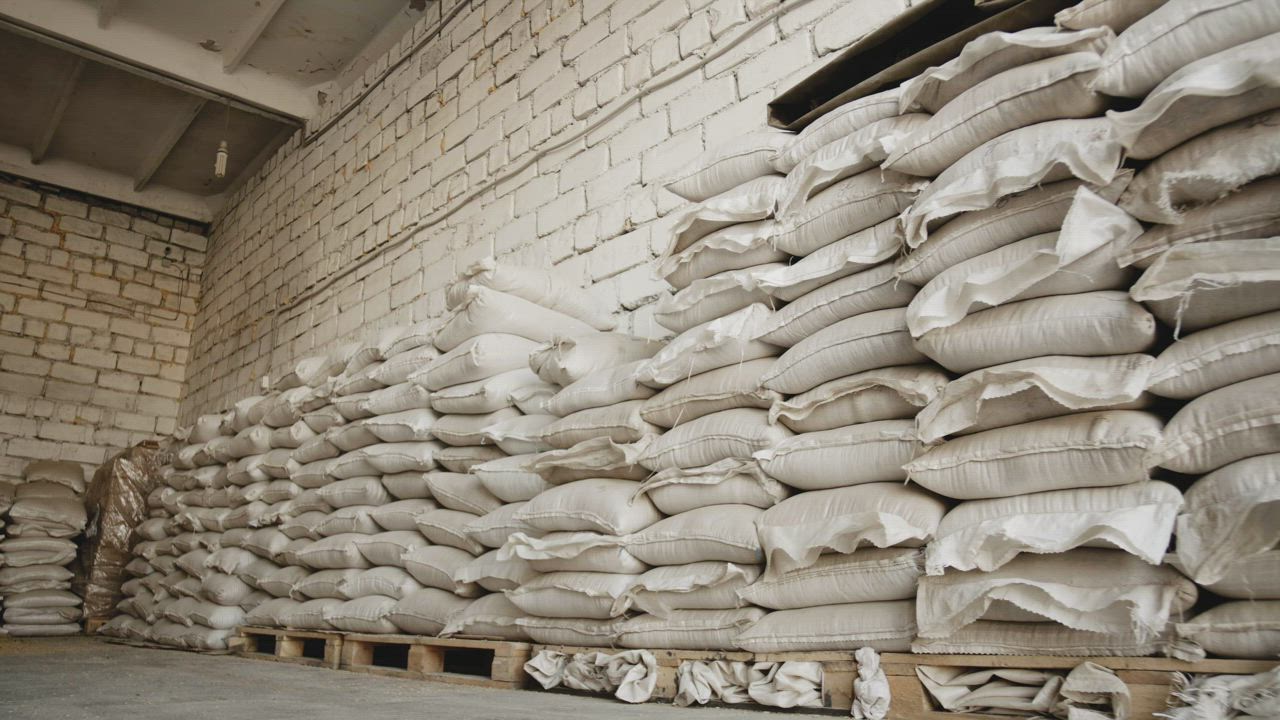
| Palletized and netted load | Many identical cartons or sacks | Height limit, overhang past net points, two-inch clearance |
| Uncrated on skids | Heavy machinery | Ask the airline first; Cargolux says heavy cargo should ideally be uncrated |
What labels and documents must go on the package?
Every package needs clear shipper and consignee details, the right handling marks and the correct paperwork, with old labels removed.
Cargolux advises standardized marking symbols as per ISO 780:2015, most importantly the center of gravity, plus limits on forklift or crane handling and stacking. United Cargo requires removing any previous tags, stickers, labels or tape from ULDs to reduce misrouting. Put the air waybill number on each piece where your forwarder requires it; our air waybill explainer covers the document, and you can use AWB tracking once the shipment is booked.
Dangerous goods, including lithium batteries, dry ice and some liquids, have separate packaging, marking and documentation rules in the IATA Dangerous Goods Regulations. Read our dangerous goods classes guide before you pack them, and remember that security screening applies too: see known shipper and screening rules.
What is a practical packing checklist?
Work through the list below before the cargo leaves your dock.
- Ask your airline or forwarder for its height, weight and ULD limits.
- Choose a carton or crate that can take strap and net loads, not only stacking.
- Fill voids and brace the goods so nothing can move.
- Check wood thickness and confirm the ISPM 15 mark where required.
- Apply ISO 780 handling symbols and a clear address label; remove old labels.
- Declare and pack any dangerous goods to the IATA rules.
- Photograph the finished package for your records and your insurer.
If you want help choosing the right service for general cargo, JumboGeneral is the Jumbo Air Cargo service for it. Because carrier rules differ, always confirm the packaging requirements with the airline that will fly your freight.
Frequently asked questions
How should I pack goods for air freight?
Use strong outer cartons or crates, fill voids so nothing moves, and put heavy items low and light ones on top. Mark the package with the handling symbols and the consignee details, and check the airline's own pallet-building rules if you tender a built-up pallet.
Do wooden crates need ISPM 15 treatment for air freight?
Yes, if the wood is thicker than 6 mm. Cargolux says wood packaging over 6 mm must comply with ISPM 15, and the exemptions for manufactured wood like plywood are described in the USDA APHIS guidance. Check the destination country's rules before you ship.
What is the maximum pallet height for air cargo?
It depends on the aircraft and the airline. United Cargo, for example, rejects any pallet over 64 inches (160 cm) including the pallet board, net and straps, so ask your airline or forwarder for its limit before building.
Can I wrap a pallet of perishables in plastic?
Not always. United Cargo says ventilated perishable packages should not be wrapped in plastic sheets, so that ventilation continues throughout the trip. Follow the packer and carrier instructions for each commodity.