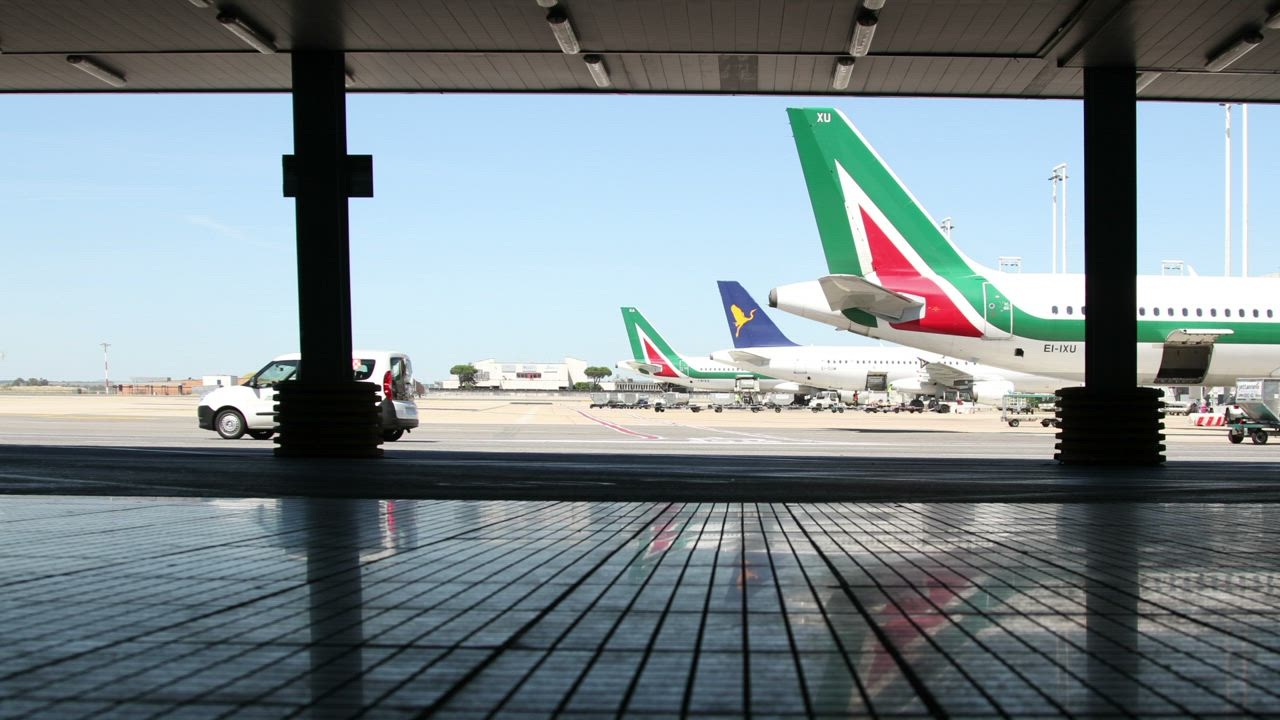
Outsize air cargo is freight that will not fit through a standard main-deck side door or on a standard pallet, so it needs a nose-loading freighter or a purpose-built heavy lifter. A Boeing 747-8F side door opens 134 x 120 in (3.4 x 3.1 m), a 777F side door 146.5 x 120 in, and an Antonov An-124 hold measures about 36.5 x 6.4 x 4.4 m.
Key takeaways
- Outsize means the piece exceeds the door or pallet limits of the aircraft you would normally use, not a fixed weight or size.
- The 747-8F adds a nose door on top of its side door, which is why long pieces such as pipes, blades and fuselage sections fly on it.
- An-124 style heavy lifters swing the whole nose open and carry onboard cranes, so machinery can be driven or winched straight in.
- Give the forwarder exact dimensions, weight, center of gravity and lifting points before asking for a quote.
- Door, pallet and floor-load limits differ by aircraft and operator, so confirm every figure with the carrier for your flight.
What counts as outsize air cargo?
Outsize cargo is freight that will not fit through a standard cargo door or on a standard pallet position of the aircraft that would normally carry it, so it needs a different aircraft or a special loading plan.
No single size defines it. A piece that is routine for a 747 freighter is outsize for a passenger aircraft's belly hold, and a piece that fits a 747 may be outsize for a 777. In practice, forwarders split air cargo into three groups:
- Standard cargo that is built onto pallets and containers (see our guide to ULD and air cargo pallet dimensions).
- Oversize cargo that fits the main deck of a freighter but exceeds belly-hold door or contour limits.
- Outsize and heavy cargo that needs a nose door, a heavy lifter or a dedicated loading plan, such as turbines, vehicles, mining and energy equipment, or very long pipes and structures.
The practical question is always the same: which doors, floors and positions does the flight you want actually offer?
What are the door and pallet limits on common freighters?
On a Boeing 747-8F the main-deck side door opens 134 x 120 in (3.4 x 3.1 m), and on a 777F it is 146.5 x 120 in (3.7 x 3.1 m); the 747 also has a nose door for longer pieces.
The figures below come from the operator data sheets of Atlas Air for the 747-8F and the 777-200F, and from STAT Times' September 2026 report on a Maximus Air An-124-100.
| Aircraft | Main-deck loading | Key opening or hold size | Stated capacity |
|---|---|---|---|
| Boeing 777-200F | Side door (left) | 146.5 x 120 in (3.7 x 3.1 m) clear opening | Check with the operator for your configuration |
| Boeing 747-8F | Side door and nose door | Side door 134 x 120 in (3.4 x 3.1 m); nose door limits depend on package height | Maximum revenue payload 132,630 kg; main compartment 694.1 m³ |
| Antonov An-124-100 (Maximus Air) | Nose swings open; onboard cranes | Hold about 36.5 x 6.4 x 4.4 m, 850 m³ | Maximum payload 120 tonnes |
Atlas's 747-8F sheet also shows the main deck laid out with 27 pallet positions at 96 x 125 x 118 in plus five at 96 in height. Those are the standard positions; an outsize piece usually displaces several of them, which is part of why it costs more per kilo.
Why does the 747 freighter's nose door matter?
The nose door lets long and tall pieces slide in along the length of the main deck instead of having to turn through a side door.
A side door limits what you can load to what fits through the opening and can be turned in the cabin. A nose opening removes most of that constraint for length: Atlas's sheet gives a table of nose-door package limits that trades height against width, so a low, wide piece can be wider than a tall one. For example, the sheet lists 106 in of width at 96 in of height, and wider limits as the package gets lower. The 747-8F also has a stretched fuselage compared with the 747-400F, which Airport Technology reports adds about 120 m³ of volume.
The nose door is why shippers of pipes, turbine blades, rotor shafts and similar long items so often ask specifically for a 747 freighter. Confirm with the airline that your piece is accepted on the specific aircraft and flight.
When do you need an An-124 style heavy lifter?
You need a heavy lifter when a piece is too heavy, too tall or too wide for a 747 or 777, or when the airport has no ground equipment to load it.
The An-124 is the best-known example. According to STAT Times, its front-loading design swings the entire nose open on a hinge so machinery, turbines or aircraft components can be driven or winched straight into the hold, and its onboard cranes let it load and unload at remote or poorly equipped airports. Maximus Air, an all-cargo airline in Abu Dhabi that specializes in outsized cargo, reports a maximum payload of 120 tonnes for its An-124-100 within a hold of 850 cubic meters, and a maximum takeoff weight of 392 tonnes. STAT Times reported that the aircraft's first call at Navi Mumbai International Airport on September 2, 2026 carried about 46 tonnes of cargo from Abu Dhabi, a reminder that airports are still adding the ground support to handle such flights.
Heavy lifters are normally chartered rather than booked per kilo, since the whole aircraft is built around one load. Our guide to air charter vs scheduled freighter capacity explains how that pricing works and when it makes sense.
What information does a forwarder need to quote outsize cargo?
Provide exact dimensions, weight, center of gravity, lifting points and the airports and dates, because the quote depends on whether the piece physically fits a given door and floor.
- Dimensions and weight of each piece as packed, including crates, skids or cradles. Do not use the dimensions of the bare machine.
- Center of gravity and lifting or tie-down points, so the loadmaster can position and secure the piece.
- Drawings or photos and the packaging type, which also matter for handling at both airports.
- Origin and destination airports, and whether either lacks a high loader, crane or forklift of sufficient capacity.
- Dates and flexibility, since the right aircraft may only fly the lane on certain days.
- Dangerous goods content, such as batteries, fuel or fluids left in equipment, which must be declared and may need to be drained or removed.
Billing for outsize freight still starts from the shipment's volume and weight. Our air freight cost calculator shows how chargeable weight works for scheduled space, even though a charter quote prices the aircraft instead. The finished consignment still travels under an air waybill, and you can follow it with AWB tracking once it is booked.
How can you reduce the cost and risk of an outsize move?
Break the piece into smaller modules where the design allows, plan ground handling at both ends, and book early.
- Split the load. Two pieces that fit a standard freighter door often cost less than one that needs a heavy lifter, if the equipment can be disassembled and reassembled safely.
- Check both airports. The aircraft is only half the question; the airport needs a loader or crane that can handle the piece, and a road route to and from it.
- Allow time for permits. Heavy and outsize shipments can need extra operator approvals and documents; ask early what the carrier requires.
- Insure for the real value. Carrier liability is limited by international conventions and may be well below the value of heavy equipment; see our guide to air cargo insurance and carrier liability limits.
- Use a specialist. Jumbo Air Cargo's JumboPower service is set up for heavy and outsize consignments.
Whatever route you choose, treat every number in this article as a starting point. Door sizes, floor strength, contour limits and payloads vary by aircraft, configuration and operator, and the airline's own loading specialist has the final say on whether a piece will fly.
Frequently asked questions
What counts as outsize air cargo?
Cargo that exceeds the dimensions or weight limits of the standard pallet or container positions, or of the cargo door, on the aircraft that would normally carry it. There is no single industry-wide size; it depends on the aircraft and the lane.
Which aircraft can carry the longest pieces?
Freighters with a nose door, such as the Boeing 747 freighter, and heavy lifters such as the Antonov An-124 can take long or tall items that will not pass a side door. Operators publish door and hold limits for each aircraft.
Can outsize cargo move on a scheduled flight?
Sometimes, on a scheduled 747 freighter, if the piece fits the door limits and the airline accepts it. Otherwise it usually moves on a charter, which is covered in our guide to charter versus scheduled freighters.
What information does a forwarder need to quote outsize cargo?
Length, width, height and weight of each piece, the center of gravity, lifting and tie-down points, packaging type, origin and destination airports and the required dates. Drawings or photos help the operator plan the load.
Is outsize cargo always more expensive per kilo?
Usually, because it ties up more of the aircraft and needs special loading equipment and planning. Compare an all-in quote rather than a rate per kilo.